My Leadville 100 Training
Success at Leadville is an equal blend of fitness, fueling, and the mental game. Fitness is not the sole determinant, but it plays a large role. Training for the Leadville 100 MTB for me was as much about structure and consistency as anything else. This post outlines down exactly how I prepared: the coaching, the volume, the types of workouts, how I handled altitude, and a high level of what equipment I used throughout the process. If you’re thinking about training for the Leadville 100 I hope this gives you a high level blueprint on what the raw ingredients towards successful prep are.
This is Part 2 of my multi-part Leadville blog series. Full post list here.
Coaching for Leadville
Every athlete (even Tour de France winners) needs a coach and I’m no different. With work, family, and life in full swing, I knew I wasn’t going to build a training plan on my own and actually stick to it. That would have been a recipe for failure. I opted to work with a coach. I spent $299/month, it was financially a bit of a strain but my Leadville experience would not have been the same without their guidance along the way. Again, every athlete needs a coach.
How I Prepared for Leadville - High Level Structure
Leading into 2025 I spent ~3 months on the trainer doing 3-5 hours of zone 2 a week. This was the "get back into riding" type of zone 2 where at first 180 watts felt like hard tempo by the end (definitely no longer in zone 2) but by late December I did an indoor trainer century and 200 watts was starting to feel like a comfortable zone 2 pace again. Again, this was coming off of a few years of virtually no real training and only a little riding.
I had an OK base leading and zero durability leading into structured work to prepare for the race.
From January through mid-March, nearly all my training happened indoors on my old-school Kurt Kinetic trainer. No smart trainer, no ERG mode, no Zwift. Just my legs, a fan, a boring spot on the wall to start at, and a lot of sweat. I only had access to a road bike until June so I trained exclusively on the road until then when my mountain bike finally arrived. From that point on I was exclusively riding the mountain bike outdoors.
My weekly structure was simple but effective:
- 8–10 hours per week was the norm, I increased volume later in June/July above this
- Up to 5 structured sessions a week
- A pyramidal training distribution
Many weeks looked something like:
- Monday: Zone 2 endurance ride, typically 60-105 minutes on the trainer
- Tuesday: Threshold OR Vo2 Max; many variations of threshold/Vo2 workouts
- Wednesday: Off or Recovery
- Thursday: Tempo / Sweet spot Session; more tempo on deload weeks, more sweet spot or over/unders during load weeks
- Saturday: another Zone 2 ride, always my "long ride" from 2-6+ hours, building through the training plan
- Sunday: Off
I'd often have one extra aerobic or skills-focused ride if life allowed, usually a recovery ride (single leg drills, high cadence bursts, sprints). There were weeks where I'd have a Threshold and a Vo2 sessions (not just Threshold and Tempo/Sweet Spot). There were also weeks where we did a lot more Zone 2 works and a lot less intensity above that, all part of a solid load, deload, load more build. Variety kept things very interesting.
Data Behind a Sub-9 Hour Leadville Training Plan
Now let's add some meat to the bones above. I'm not going to give you a whole calendar of workouts. If you want that, sign up for Racepace or hire a coach. I'm also more than happy to hop on the phone and chat about it. What I want to do is give you the high level of zone time distribution, weekly volume, and long ride progression. This is essentially what I believe it takes to go sub-9 at the Leadville 100 MTB and earn your big buckle.
Weekly Training Volume
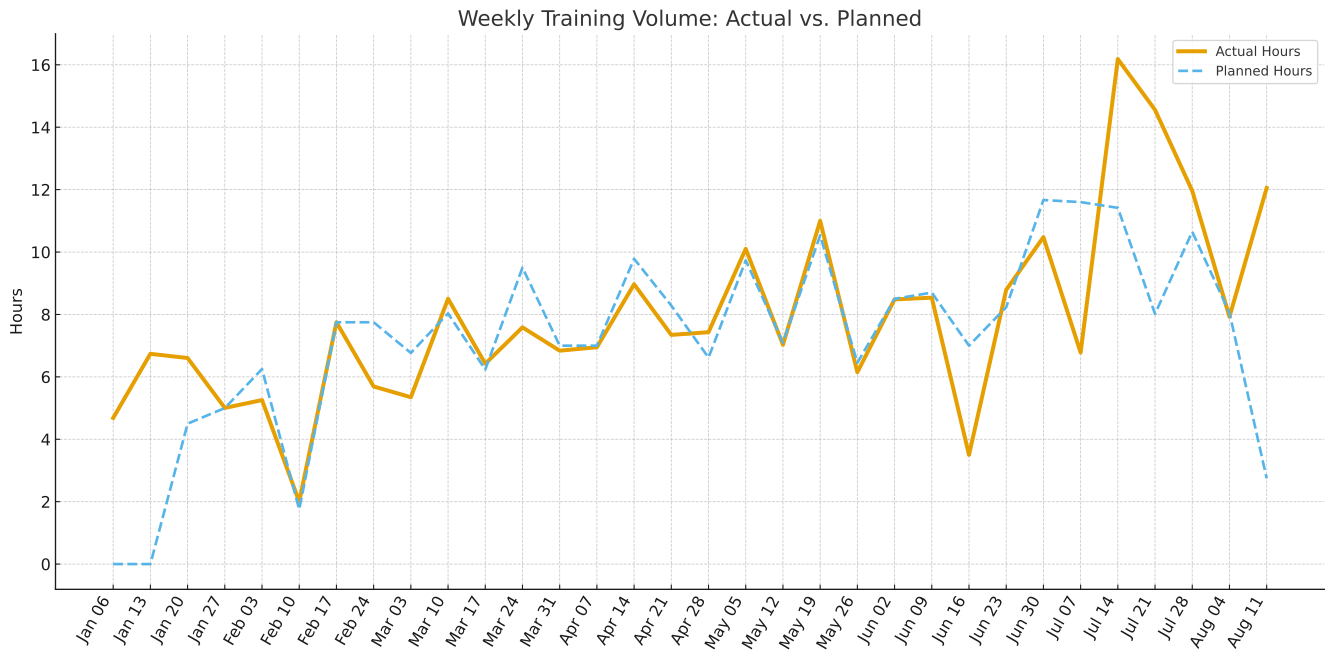
What to takeaway from this:
- Dips didn't derail the trend: in the short term progress feels elusive especially when we miss days. Over the long term the picture and progress become much clearer. I had blips on the chart in February and June (illness). As well as early July (around the holiday here in the US). I was surprised to see though just how well I did train. Before seeing this data I'd have said I was just an OK athlete to coach.
- Structured progression: weekly volumes followed clean build–recover waves, exactly how endurance fitness is developed.
- Specificity peaks at the right time: The biggest, most consistent weeks land in June–July which was perfect timing for Leadville.
- Durability improves across the build: stacking heavy weeks later into the program as fatigue resistance grew worked well.
Actual Zone Distribution
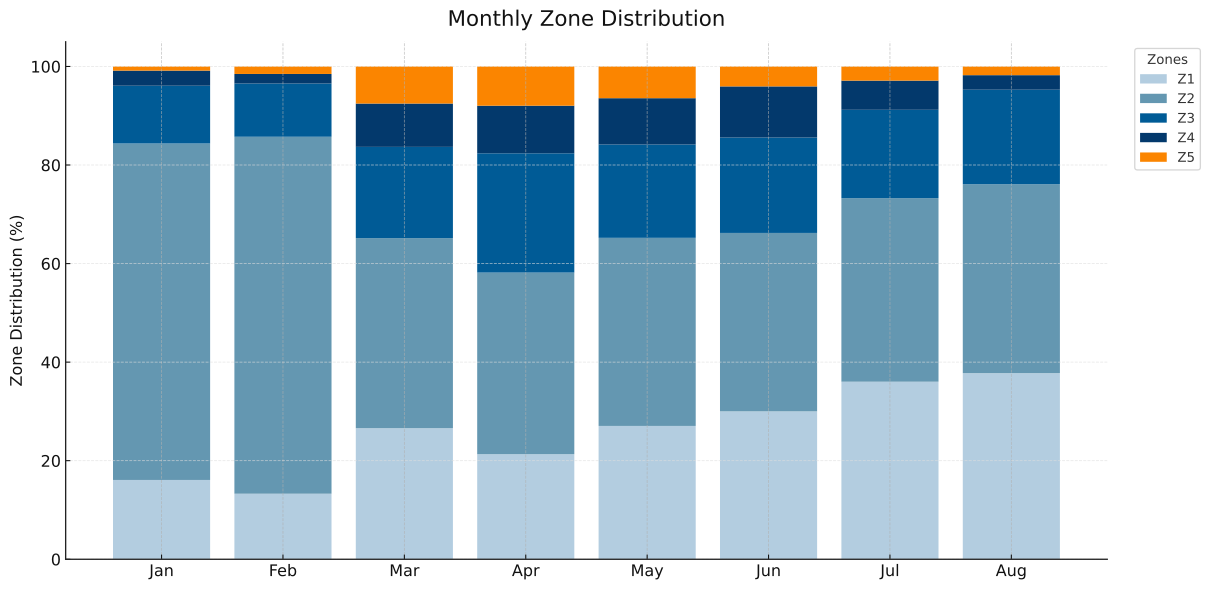
What to takeaway from this:
- Purely pyramidal: most of my time sat in Zone 2 with a bit of work in Z3–Z4, the ideal shape for long alpine climbs.
- Intensity was dosed thoughtfully: very little Z5/Vo2 work, keeping fatigue manageable and letting me stack more total volume.
- Threshold was my best friend: Z4 built the sustained power needed for long, steady Leadville efforts to develop lactate clearance.
- Altitude-appropriate training: distribution reflect what's sustainable/accessible at 10k+ feet
Long Ride Build
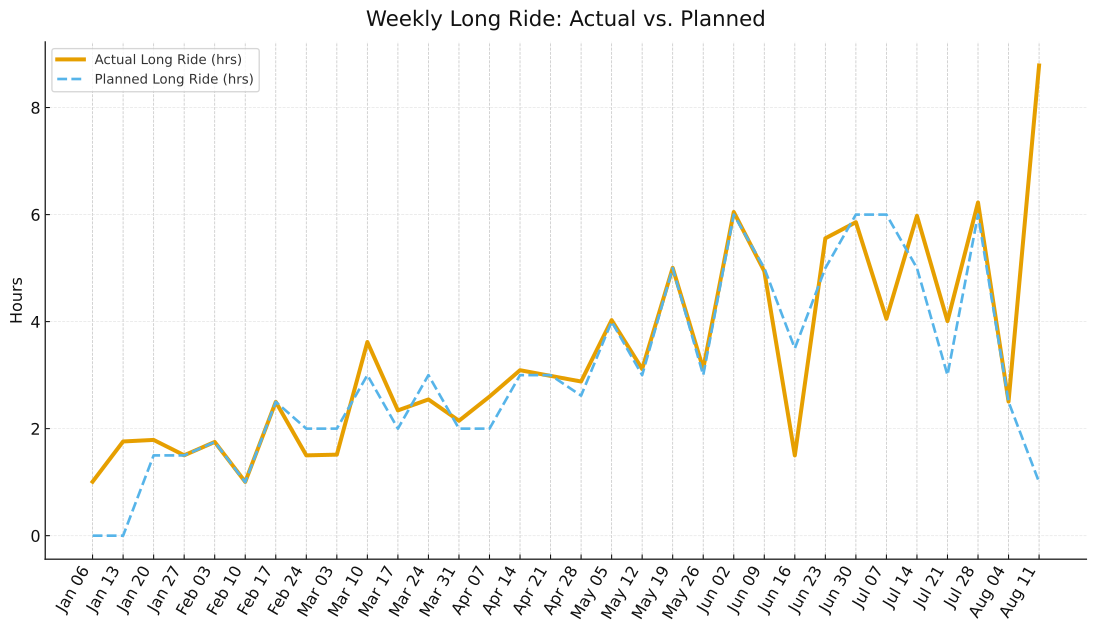
What to takeaway from this:
- Time in saddle matters: I needed to get comfortable on the bike and with fueling over 3, 4, 5, and 6+ hour efforts starting in April.
- Well-timed breakthroughs: the biggest jumps in long-ride duration landed in late spring and early summer
- Race-specific endurance arrives right on time: July holds multiple long rides in a row, giving me the altitude-ready “all-day” engine
Quick Thoughts on Training
I wouldn't change much about my training. There were dark days on janky hotel spin bikes or Pelotons on work trips. And some cold, wet Spring rides early in the morning. That is just what it takes to achieve goals. I did learn a few things through training that I'd double down on next time:
Leadville shouldn't have been my first race
Leadville was my first time practicing fueling, using my crew, testing my fitness - a Leadville Qualifier (to improve corral position) or another early seasons XC mountain bike race would have helped build some confidence in my prep by battle testing bike setup, fitness, nutrition, etc.
Durability comes from time in saddle
When I stepped up the volume through late-Spring and early summer the fitness gains were noticeable, specifically durability (Dylan Johnson has more on this idea). I was recovering faster on threshold intervals, my cardiac drift during shorter Zone 2 or Tempo sessions was diminished. As an example of this I'd often do 2x20 minutes at tempo and consistenly see my average heart rate 5-7bpm higher on the second intervals in March/April. By late-June and July I'd often have a lower average heart rate on the second interval. That to me means durability.
Fueling is a gamechanger on and off the bike
I'll do a detailed post on fueling but for the first time I was using real carb mix vs. a few Snickers bars, a banana, and gels on training rides. This helped with training my gut for up to 120g/carbs an hour at sea level. More importantly, it meant that when I got home I wasn't a couch potato for the next few hours. I could return the favor to my wife and get quality time with my <1 year old and actually be present and engaged.
Altitude Training for Leadville 100
I trained at sea level for most of my preparation as I live in the Northeast so altitude was a big question mark. Here’s how I handled it:
- 5 weeks in Boulder leading into the race. My life allowed it. I left my job to start building Racepace and to train full time. My wife work remotely so we packed up the baby, my bikes, and the dog and headed to live with her brother for the Summer.
- 1 week back in Boston the week before the race. My sister had her wedding so I went back to sea level for 6 days.
- Back in Boulder 6 days before the race, driving up to Leadville two nights before the race
Was this perfect? No. But it gave me time to fully acclimate to 5.2-9k feet of elevation (I don't think I lost any adaptations during my quick trip back East). It also provided enough exposure to understand how my body handled altitude, and a chance to get exposure to sustained long climbs that simply don’t exist on the East Coast.
Boundless coaching has an AWESOME webinar on training/racing at altitude that covers some science and tips as well. There is a fair bit of content on training and racing at altitude out there beyond Boundless' webinar as well. Let me know if you'd like to hear more from me on it. My quick take is for most riders training at sea level arriving to Leadville the day or two before is totally fine. My approach of arriving early enough to adapt, but not so early that fatigue accumulates worked well. I wasn't back at sea level long enough to lose adaptations either.
My Fitness on Race Day
Anyone who finishes Leadville will tell you that FTP alone will not give you a good finish. Nutrition and mindset matter just as much. That said, I FTP tested 3 times before Leadville. Always a 20 minute test on the trainer.
The progression was as follows:
- January: 317 watts NP, 305 watts, 3.3 w/kg
- March: 316 watts NP, 298 watts, 3.7 w/kg
- June: 319 watts NP, 303 watts, 4.07 w/kg
- September: 339 NP, 322 watts, 4.3 w/kg
I got to Leadville with no paper gains in my FTP, but a significant improvement in w/kg. This was a very hard to reconcile mentally. I felt fitter but my FTP wasn't showing it (this is a big reason why another race would have helped).
I suspect I was actually much fitter than what the test showed and a few different factors (heat, fatigue, stress) contributed to no absolute improvements to FTP watts until September. The September test was exactly 1 month after Leadville and I'd done virtually no training other than a few Zone 2 rides a week between the race and that test. I was more recovered but also detrained.
Equipment During Training
For the majority of training, I was on my road bike. I didn't order a race bike for Leadville until June. All of my interval work happened on the trainer because the Northeast is simply too flat and filled with stop signs/traffic lights for outdoor intervals. Again, my indoor setup is pretty spartan - I throw my road bike with a trainer wheel on the fluid trainer and sit on with a box fan and some music. I can be a glutton for punishment.
As the weather got a bit milder I was able to add long outdoor rides on weekends starting in April (still on my road bike). By June when my mountain bike arrived I transitioned to almost 100% of my outdoor rides on it. I was still doing 100% of interval work inside until I went out to Boulder. Once we got to Boulder all of of my riding was outside, on the road and on singletrack with intervals done on longer climbs.
I kept things very simple for the most part. I'll talk in more detail about my bike, kit, and nutrition in more detail in other posts.I kept things very simple for the most part. I'll talk in more detail about my bike, kit, and nutrition in more detail in other posts.I kept things very simple for the most part. I'll talk in more detail about my bike, kit, and nutrition in more detail in other posts.
What I Learned From the Training Process
A few things that I've reflected on since finishing the training and race:
- Consistency mattered more than hero rides: I hit ~100% adherence to my plan, outside of travel and getting sick, and that consistency was everything. The best way to stay on track after illness/injury is to recover and then just get back on the bike.
- Pyramidal training is perfect for Leadville: the race rewards aerobic strength and durability in tempo/threshold, not excessive intensity.
- A coach accelerates everything: objectivity, structure, and accountability beat self-coaching 11/10 times
- A good training partner was key: my cofounder, Kevin did all my long rides with me and kept me sane
- MTB skills matter: I did absolutely no work on this, and I paid for it during the race (more on this to come in a later post).
- Altitude prep is helpful but not mandatory: proper pacing, fueling, and the mental game are more important, in my opinion.
Coming Soon
Subsequent parts of this series will be live soon.
If you're training for Leadville (or any endurance MTB event) and want access to coaching, consider joining Racepace. Instead of several hundred dollars a month, we offer coaching for the montly price of Netflix.